
01
Family-owned · East Dundee Local
Paver Patio Installation Built for Northern Illinois Freeze-Thaw
Call directly(224) 325-7922FreeEst.
Instant Quote
Get an estimate here.
We'll follow up within one business day. No pressure, no upsells.
Why Choose V. Cardenas Landscaping, Inc. for Paver Patio Installation Built for Northern Illinois Freeze-Thaw
If you're looking at paver patio installation on a Fox Valley lot, the patio that heaves and gaps first isn't the one with the cheapest pavers. It's the one set on a thin, poorly drained base. V. Cardenas Landscaping, Inc. builds a paver patio as a drainage and base job first and a surface job second, because on the heavy clay soil along the Fox River corridor, water trapped under the pavers is what freezes, lifts corners, and opens joints after a couple of winters. Virgil Cardenas has laid patios across South Elgin, Sleepy Hollow, and Elgin for 20+ years, and he walks every site in person before quoting. Call (224) 325-7922 and we'll read the grade and the soil before we talk pavers.
Here's the part most patio quotes skip. In northern Illinois, frost pushes down to roughly 40 inches during a hard winter, and Fox Valley clay holds water instead of letting it drain away. That combination is exactly what heaves and cracks a patio set on a shallow base. So we excavate deeper than a lot of crews want to bother with, compact the aggregate base in lifts rather than dumping it all at once, and pitch the whole surface so water runs off instead of sitting under it. Get the base right and the pavers stay level for years. Get it wrong and the prettiest patio on the block still lifts at the corners by the third spring.
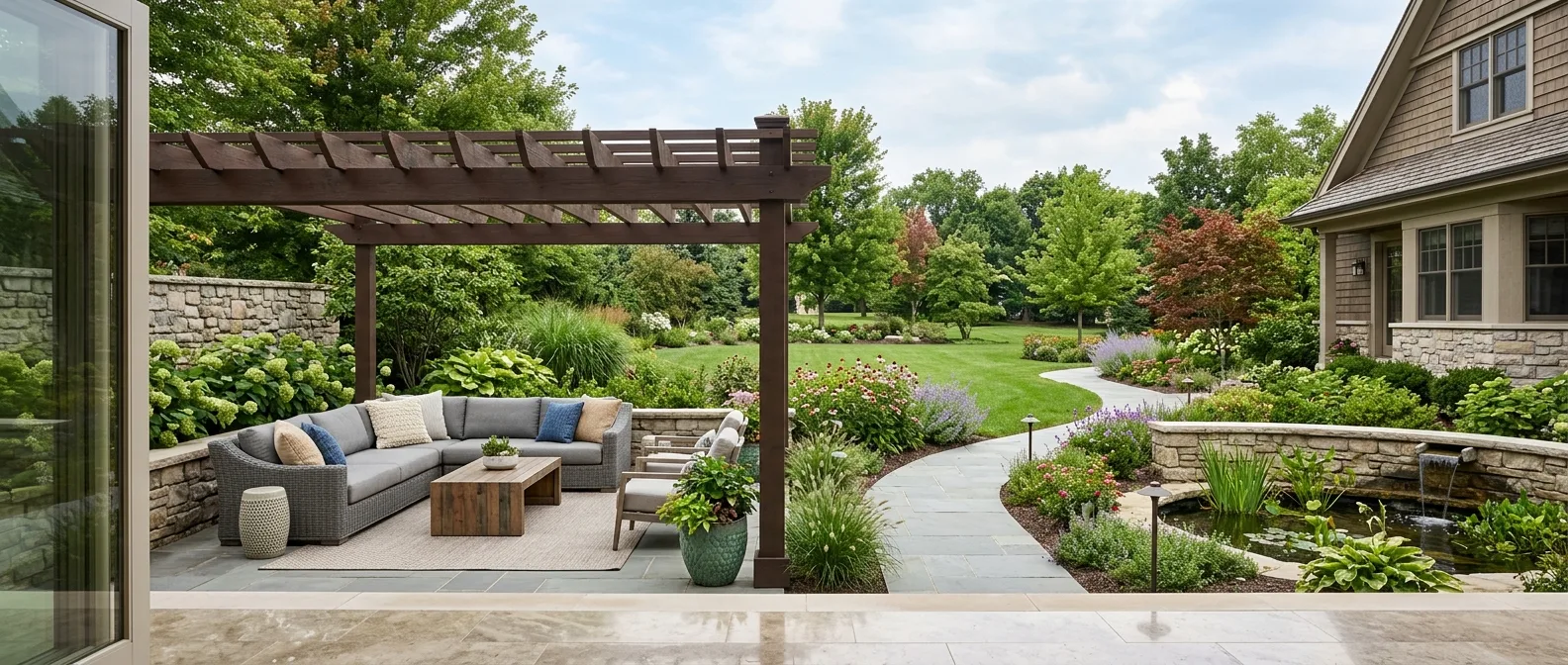
Brick paver patio installed on a compacted base and pitched to drain on a South Elgin, IL property
Paver Patio Installation, Done Base-First
Continue
Paver patio installation on a Fox Valley lot lives or dies underneath the surface, not on top of it. On the clay-heavy ground common across the Fox River corridor, a patio rarely fails because the pavers wore out. It fails because water got trapped in a weak base, froze, and lifted the field. So we build the base and the drainage first, then set pavers. Here's the sequence we run on nearly every patio.
- Read the grade and soil. Virgil walks the site, checks where water sheets across the yard, confirms the patio can pitch away from the house, and plans a base for clay that holds water rather than sandy soil that drains on its own.
- Excavate to real depth. We dig out the topsoil and cut down far enough to fit a full aggregate base, not the shallow scrape that heaves the first winter. On soft clay we dig deeper still.
- Compact the base in lifts. Crushed aggregate goes in and gets compacted in stages, a few inches at a time, so the base won't settle after the first freeze-thaw cycle. Dumping it all at once and running the plate over the top once is how patios sink.
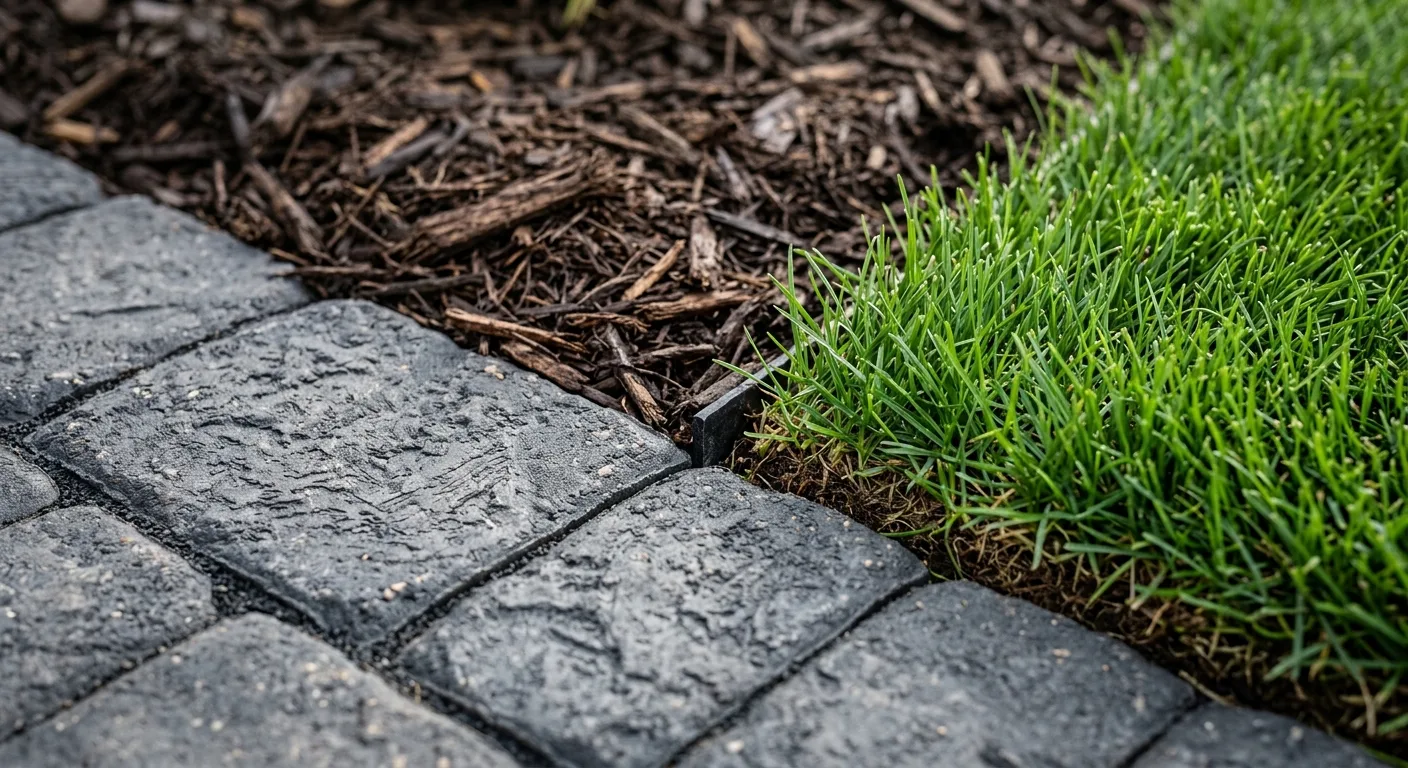
- Set the pavers and lock the edges. Bedding sand, then pavers cut to the layout, then a rigid edge restraint pinned along the perimeter so the field can't spread outward over time.
- Lock the joints and compact the surface. Polymeric sand is swept into the joints and set with a light misting so it hardens and resists washout, weeds, and ant tunneling. A final plate compaction seats every paver dead even.
That base-and-drainage work is the step that separates a patio that stays flat for decades from one that gaps in three years. Ready when you are: call (224) 325-7922 and we'll come read your yard.
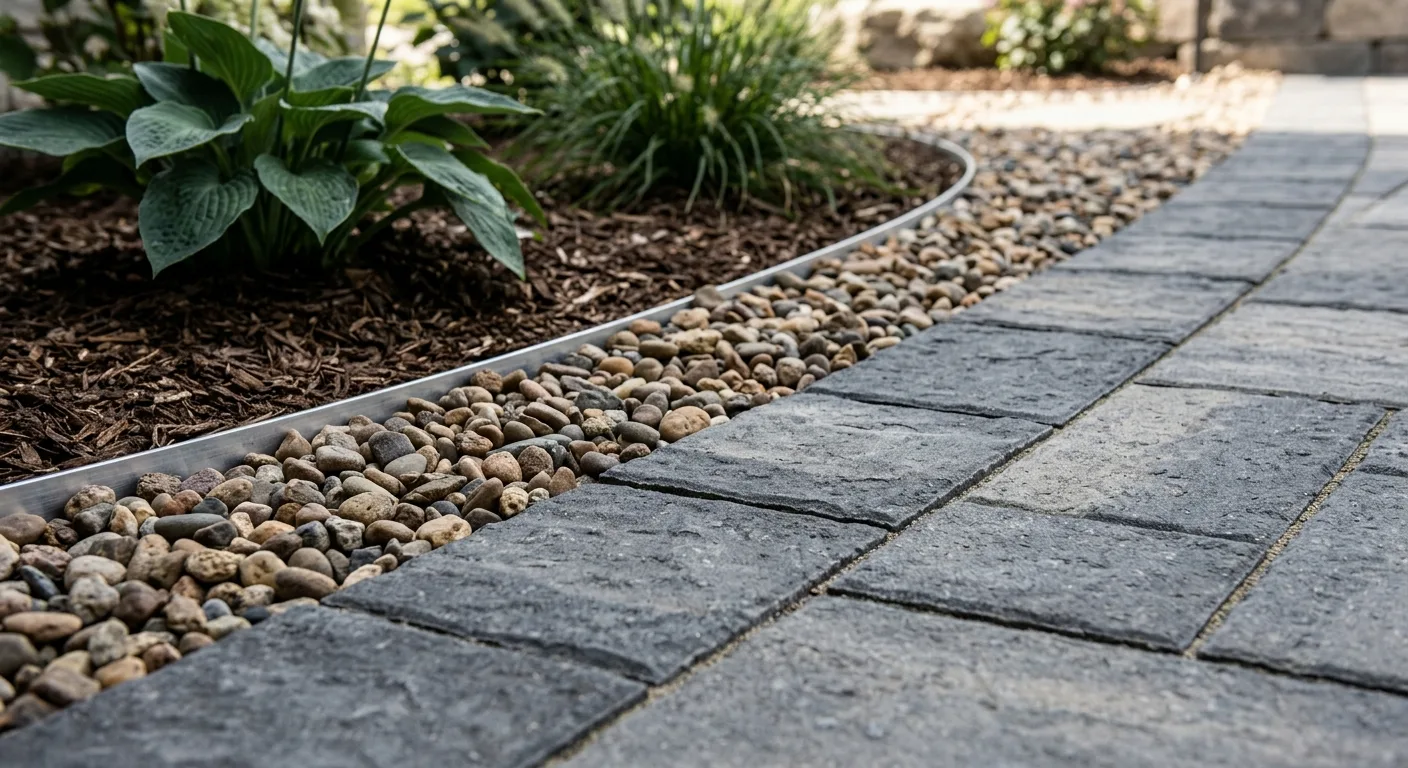
Compacted aggregate patio base being built in lifts on a clay-soil lot in the Fox Valley
Pavers vs. Natural Flagstone vs. Poured Concrete Patio
Continue
Patio contractors in South Elgin get the same question a lot: pavers, natural flagstone, or poured concrete? The honest answer is that on our clay soil and freeze-thaw cycle, what happens under the surface matters more than the surface you pick, but each material has a real place. Here's how the three compare on a Fox Valley property.
- Concrete pavers: The workhorse for most residential patios here. Individual units flex slightly with the ground instead of cracking, a single stained or chipped paver can be swapped out, and the joints let the surface breathe. Best all-around value on a clay lot that moves every spring.
- Natural flagstone: The look a lot of homeowners want, especially on established properties. It costs more and takes longer to lay, and it still needs the same compacted base and drainage underneath to hold its shape through winter. Beautiful, but it doesn't skip the base work.
- Poured concrete: Cheaper up front and fast to place, but a rigid slab is the least forgiving of the soil movement Fox Valley clay produces. Once it cracks, you patch it or replace the whole slab. We'll pour it when a site genuinely calls for it, not by default.
"People pick the material for the look and assume that's the whole decision. On a clay lot the thing that actually keeps a patio flat is the base and the pitch under it. We build that the same way no matter which surface you choose."
Don't call us for a paver patio if your project is really a slope problem in disguise. On a hillside lot, the patio has to sit on level ground, which usually means holding the grade first. In that case a patio paired with a retaining wall on the sloped side is the honest fix, and we'll tell you that at the estimate rather than laying pavers over a grade that won't hold. Tell us what's going on and we'll come back with a real recommendation.
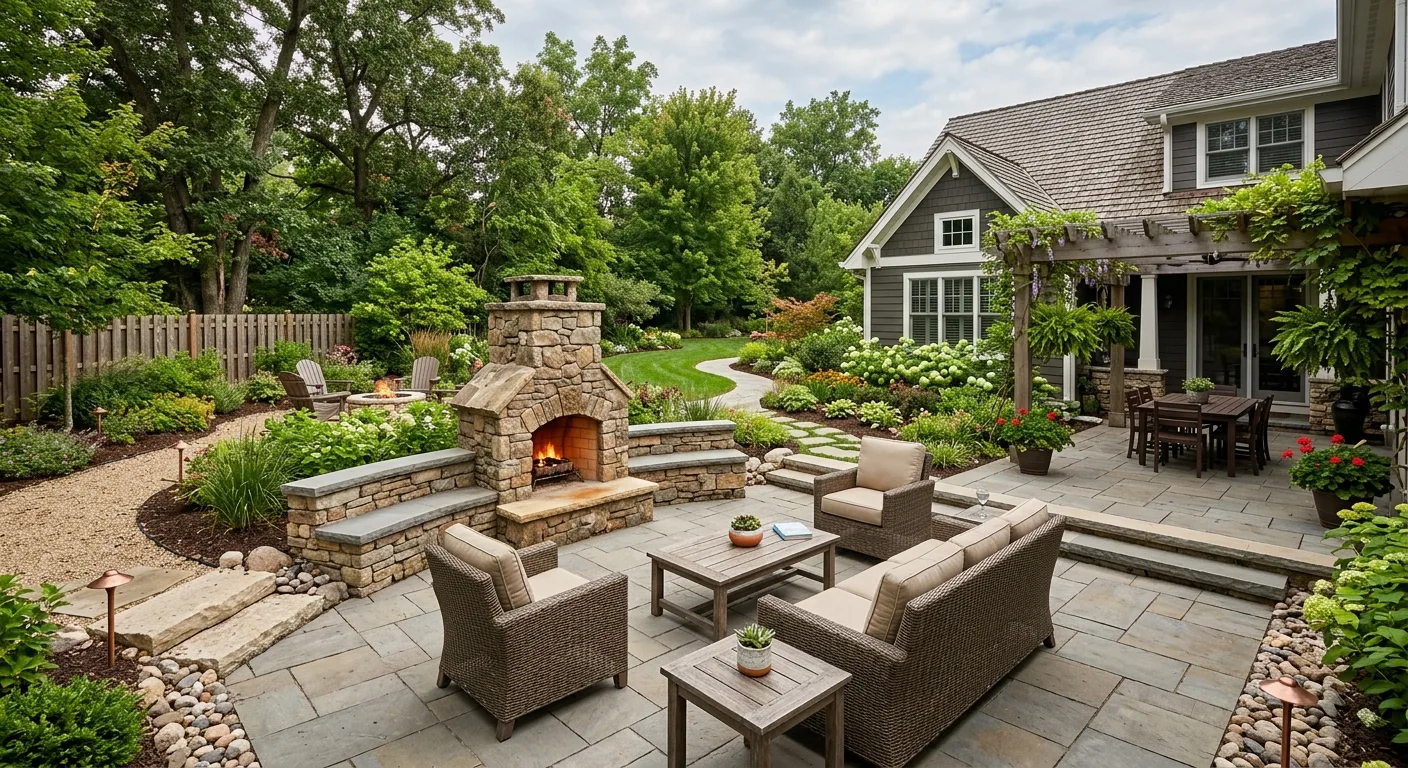
Paver Patio Options We Install Across the Fox Valley
Details below
A patio is one of several ways to build usable outdoor space, and the right one depends on the material, the grade, and how water moves on your lot. Here's what V. Cardenas builds across the Fox Valley.
02
Natural Flagstone Patios
03
Outdoor Living and Fire Pit Areas
04
Walkways and Paver Paths
05
Patios on Sloped Lots
06
Patio Repair and Releveling
Natural flagstone patio with polymeric-sand joints near Sleepy Hollow, IL
How Big Should Your Patio Be?
Continue
Most people size a patio too small, then wish they'd gone bigger the first time they try to fit a table and chairs on it. Sizing a patio is really about what you actually do out there, not a square-footage number pulled off a chart. Here's how we think it through on the site visit.
How we size a patio to how you'll use it
A dining set needs room to pull chairs out and walk around them, which is more space than people expect. A conversation area with a fire pit needs a clear ring around the pit plus seating depth behind it. If you want both zones on one patio, they can't overlap. We lay it out on the ground before anything is dug so you can stand in the space and feel whether it's right, rather than guessing off a drawing.
Don't overbuild a patio you won't use
Here's the honest version. If your family really just wants a spot for a grill and a small table, a modest, well-built patio beats a huge one that eats the whole yard and costs twice as much. We'll size it to your actual habits, not to the biggest number that fits the lot. A right-sized patio built on a proper base outlasts and outperforms an oversized one every time, and it leaves you yard left over. That kind of straight talk is how a family business keeps its name good over 20 years.
Brick paver patio installed on a compacted base and pitched to drain on a South Elgin, IL property
Patio Base Prep and Drainage: The Part You Don't See
Continue
Patio drainage and pitch is the part of the job you stop seeing once the pavers are down, and it's the part that decides whether the patio is flat in ten years. A patio traps whatever water lands on it and whatever sheets toward it from the yard. On Fox Valley clay that water has nowhere to go if the base doesn't drain and the surface doesn't pitch, so it sits, freezes, expands, and lifts the pavers.
When the whole lot moves water badly, not just the patio area, the patio drainage ties into a broader plan. We coordinate patios with regrading and french drain and yard drainage so the patio isn't fighting water the rest of the property is dumping on it. For homeowners in South Elgin and the Dundee area where a wet yard and a patio came as a package, solving both together is what actually kept the pavers flat. Call (224) 325-7922 and we'll read where your water is going before we build anything.
Building a Patio? Get the Base Read First.
A patio built on a shallow base starts failing the first winter, and a heaving patio only gets worse and more expensive the longer the water sits under it. Get the grade and the soil read before you commit to either a new patio or a repair. Call Virgil directly at (224) 325-7922 or request a free estimate online. V. Cardenas Landscaping, Inc. installs paver patios throughout the Fox Valley, from Sleepy Hollow and South Elgin through Elgin, the Dundee area, and most Chicagoland suburbs in the northwest corridor.
Call (224) 325-7922Or send us your info
FAQ Common questions
Frequently Asked Questions
Answers below
What's the best time of year to install a patio in northern Illinois? +
Late spring through fall is the working window for patio installation in northern Illinois, roughly April through October, because the ground is workable and aggregate compacts properly when it isn't frozen or waterlogged. Early fall is often ideal: the summer rush has eased and the soil is drier than spring, which makes for cleaner base work. We can build well into October most years. What we don't do is set a base into frozen or saturated ground, because a base built on bad conditions won't hold no matter how good the pavers are.
Will pavers heave in the winter? +
Only if it's built wrong. Pavers heave in winter when water gets trapped in the base under the patio, freezes, and lifts the surface, or when the perimeter has nothing holding it in place. We prevent both. A deep, well-compacted aggregate base lets water drain away instead of holding it where it can freeze, which matters here because Fox Valley clay drains slowly and frost pushes down near 40 inches. A rigid edge restraint pinned along the perimeter keeps the field from spreading, and polymeric sand locked into the joints keeps individual pavers from working loose. Those three things together are why a properly built paver patio holds its shape through a northern Illinois freeze-thaw cycle.
How do you prep a patio base for Illinois freeze-thaw? +
The base is everything, and in the Fox Valley it comes down to depth, compaction, and drainage. We excavate deep enough to fit a full aggregate base rather than a shallow scrape, then compact that aggregate in lifts, a few inches at a time, so it won't settle after the first freeze. On the clay soil common along the Fox River corridor we dig deeper and use more base material than sandy soil would need, because clay holds water and won't help move it away. Then the whole surface gets pitched to drain. Skip the depth or rush the compaction and the base fails the first winter no matter how good the pavers on top are.
What's the difference between a paver patio, flagstone, and poured concrete? +
On most Fox Valley residential lots we build concrete pavers, because individual units flex with the clay soil instead of cracking the way a poured slab does, and a damaged paver can be swapped out. Natural flagstone is the choice when the look matters most, and it needs the same compacted base and drainage underneath. Poured concrete is cheaper up front and fast, but it's the least forgiving of the soil movement clay produces every spring, and once it cracks you patch or replace the whole slab. The material affects cost and appearance. The base under it, which we build the same way regardless, is what keeps any of them flat.
What areas do you install paver patios in across the Fox Valley? +
Yes. V. Cardenas Landscaping, Inc. installs paver patios throughout the Fox Valley and northwest suburbs, including South Elgin, Sleepy Hollow, Elgin, Algonquin, Carpentersville, and the Dundee area. Virgil has laid patios on clay-heavy lots across the corridor for over 20 years, so the base-prep, drainage, and freeze-thaw problems specific to this part of northern Illinois are ones we've already solved many times. Call (224) 325-7922 and we'll come read your grade and soil in person before quoting.