
01
Family-owned · East Dundee Local
Retaining Wall Installation Built for Fox Valley Clay and Freeze-Thaw
Call directly(224) 325-7922FreeEst.
Instant Quote
Get an estimate here.
We'll follow up within one business day. No pressure, no upsells.
Why Choose V. Cardenas Landscaping, Inc. for Retaining Wall Installation Built for Fox Valley Clay and Freeze-Thaw
If you need retaining wall installation on a sloped or wet Fox Valley lot, the wall that fails first isn't the one that looks worst. It's the one with nothing draining behind it. V. Cardenas Landscaping, Inc. builds retaining walls as drainage structures first and stacked block second, because on the heavy clay soil along the Fox River corridor, water pressure behind the wall is what leans it, cracks it, and bulges it out after a couple of winters. Virgil Cardenas has held back slopes across Algonquin, Sleepy Hollow, South Elgin, and Barrington Hills for 20+ years, and he walks every site in person before quoting. Call (224) 325-7922 and we'll read the grade and the soil before we talk block.
Here's the part most quotes leave out. A retaining wall isn't holding dirt. It's holding dirt plus every gallon of water that dirt is soaking up, and Fox Valley clay soaks up and holds a lot of it. When that saturated soil freezes and expands against a wall that has no drainage aggregate, no filter fabric, and no perforated drain at the base, the wall becomes the only thing resisting the pressure. That's why we build back-to-front: a compacted base below frost-affected depth, free-draining gravel and fabric behind the blocks, and a drain line that carries water out to daylight. Get that right and the block system almost doesn't matter. Get it wrong and the prettiest wall in the neighborhood still leans.
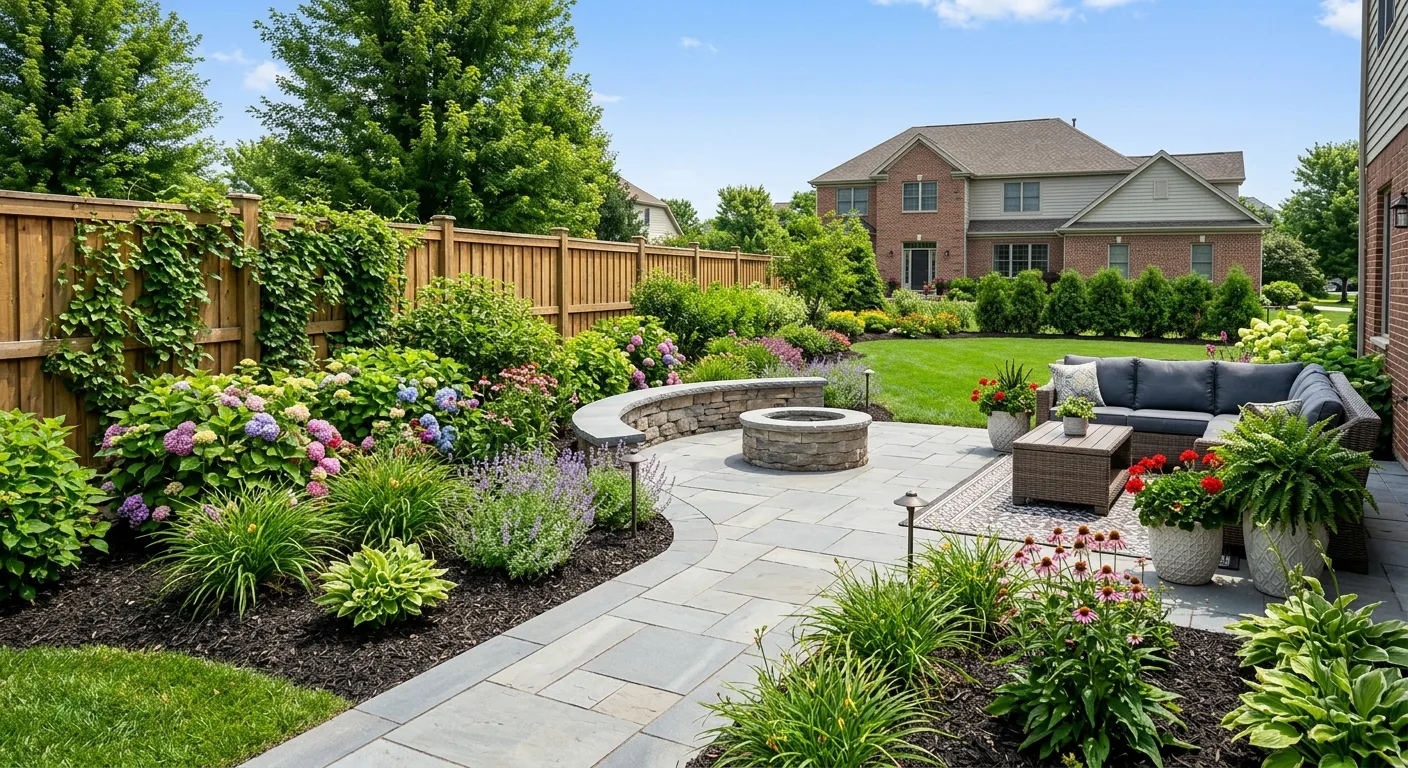
Segmental block retaining wall holding a graded slope on an Algonquin, IL property
Retaining Wall Installation, Done Drainage-First
Continue
Retaining wall installation on a Fox Valley lot is a soil-and-water job before it's a masonry job. On the clay-heavy ground common across the Fox River corridor, the wall itself rarely fails from the front. It fails from the water and frost pressure building up behind it. So we build the drainage and the base first, then set block. Here's the sequence we run on nearly every wall.
- Read the grade and soil. Virgil walks the site, checks how much elevation the wall has to hold, where water is coming from above the wall, and where it can safely go below it. On clay lots we plan for a wall that has to fight water pressure, not just soil weight.
- Excavate and compact the base. We dig a leveling trench below the loose topsoil, then lay and compact a crushed-stone base so the first course sits dead level. A wall that starts off-level only gets worse as it climbs.
- Set the base course and step back. Each course is set with a slight backward batter so the wall leans into the hill it's holding, not away from it. Segmental blocks are pinned or lipped course to course.
- Build the drainage behind the block. Free-draining gravel goes in the zone directly behind the wall, wrapped in filter fabric so clay fines don't silt it up, with a perforated drain pipe at the base that runs out to daylight or a discharge point.
- Backfill and cap. We backfill and compact in lifts, grade the top so surface water sheets away from the wall instead of pooling behind it, and cap the wall for a finished edge.
That drainage layer is the step that separates a wall that lasts decades from one that bulges in three years. Talk to Virgil about your slope: (224) 325-7922.
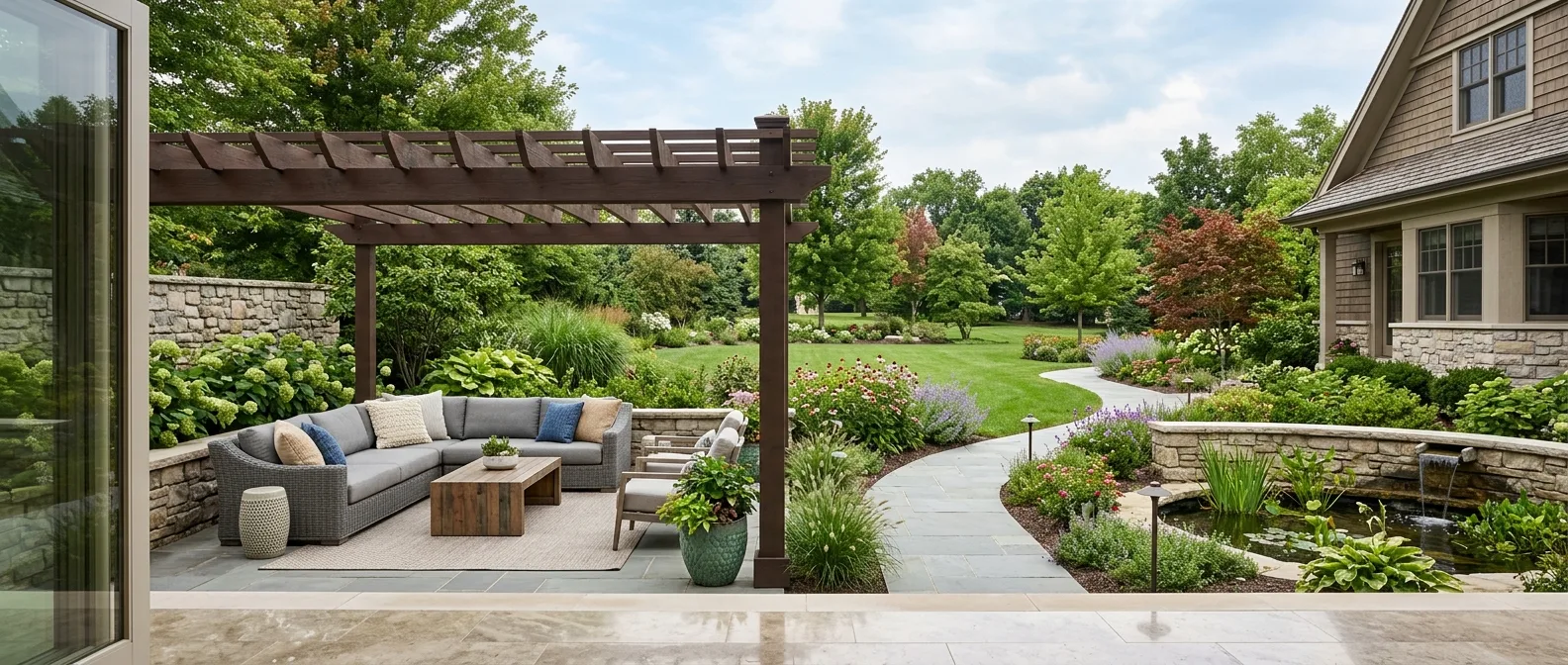
Gravel drainage backfill and filter fabric being installed behind a retaining wall on a clay-soil lot in the Fox Valley
Block vs. Natural Stone vs. Poured Concrete Retaining Walls
Continue
Retaining wall contractors in South Elgin get the same question a lot: block, natural stone, or poured concrete? The honest answer is that the material matters less than what's behind it, but each system has a real place. On low-lying South Elgin lots near the Fox River where drainage is the whole battle, we most often build segmental block because the open joints and engineered drainage make water management straightforward. Here's how the three compare on a Fox Valley property.
- Segmental (interlocking) block: The workhorse for most residential walls here. Fast to build, no mortar to crack in freeze-thaw, and the system is designed around drainage behind the face. Best value for walls holding real grade.
- Natural stone: The look a lot of homeowners want, especially on established properties in Barrington Hills. Costs more and takes longer, and a dry-stacked stone wall still needs the same gravel-and-fabric drainage behind it to hold up.
- Poured concrete: Right for tall structural walls or tight engineered situations, but rigid concrete is less forgiving of the soil movement Fox Valley clay produces every spring, and cracks show. We spec it when the site genuinely calls for it, not by default.
"People pick the material for the look and assume that's the decision. On a clay lot the decision that actually keeps the wall standing is the drainage behind it. We build that the same way no matter which face you choose."
We'll show you samples and walk through what fits your slope, your budget, and how the wall reads against the house. Tell us what's going on and we'll come back with a real recommendation.
Retaining Wall Types We Install Across the Fox Valley
Details below
A retaining wall is one of several ways to hold a slope, and the right one depends on how much grade you're holding and how the water moves. Here's what V. Cardenas builds across the Fox Valley.
02
Natural Stone Walls
03
Tiered and Terraced Walls
04
Seat Walls and Garden Walls
05
Wall Drainage Systems
06
Repair and Rebuild
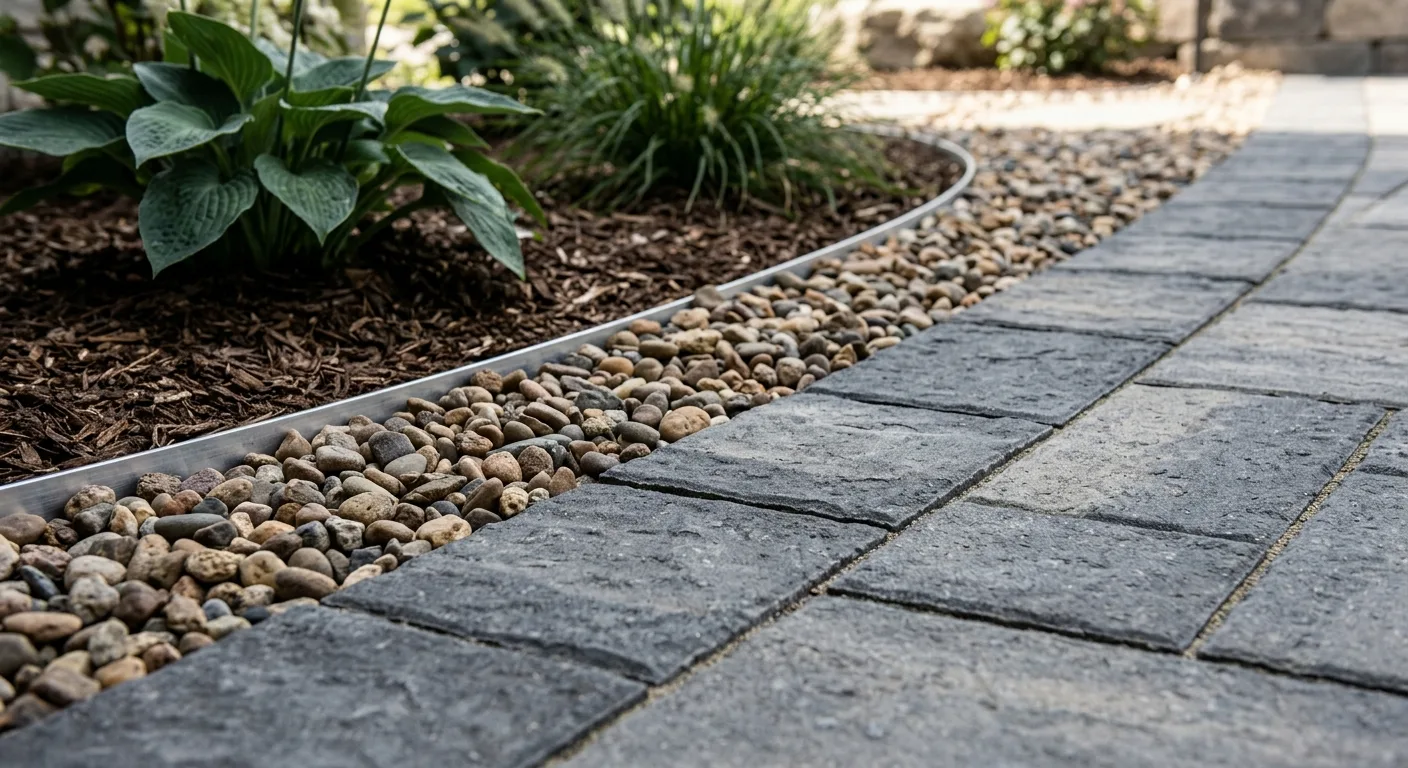
Finished capped retaining wall with graded planting bed on a Barrington Hills, IL property
Do You Actually Need a Retaining Wall for a Sloped Yard?
Continue
Not sure whether your yard actually needs a wall? A retaining wall earns its cost when a slope is either eroding, unusable, or sending water toward the house, and it's the wrong call when a simpler grade fix would do. Here's how we sort it on the site visit.
When a retaining wall is the right call
Hold a slope steep enough that soil washes downhill every storm, and no amount of reseeding sticks. Level out a hillside backyard so it becomes usable patio or lawn instead of a grade you can't mow. Stop a slope above the house from sheeting runoff toward the foundation. In Algonquin and Sleepy Hollow, a lot of the walls we build are exactly this: turning a steep, eroding side yard into terraced, planted space that finally drains where it should. If you're weighing a wall on a Fox River lot, here's how we approach retaining wall installation in Algonquin specifically.
Don't call us for a wall if this is your yard
If your slope is gentle, holds its grass, and only pools water in one low spot that dries within a day, you probably don't need a retaining wall yet. A regrade or a downspout extension may solve it for a fraction of the cost, and we'll tell you that at the estimate instead of selling you block you don't need. A retaining wall is a real structure with a real price. We only recommend one when the slope genuinely calls for it. That honesty is how a family business keeps its name good over 20 years.
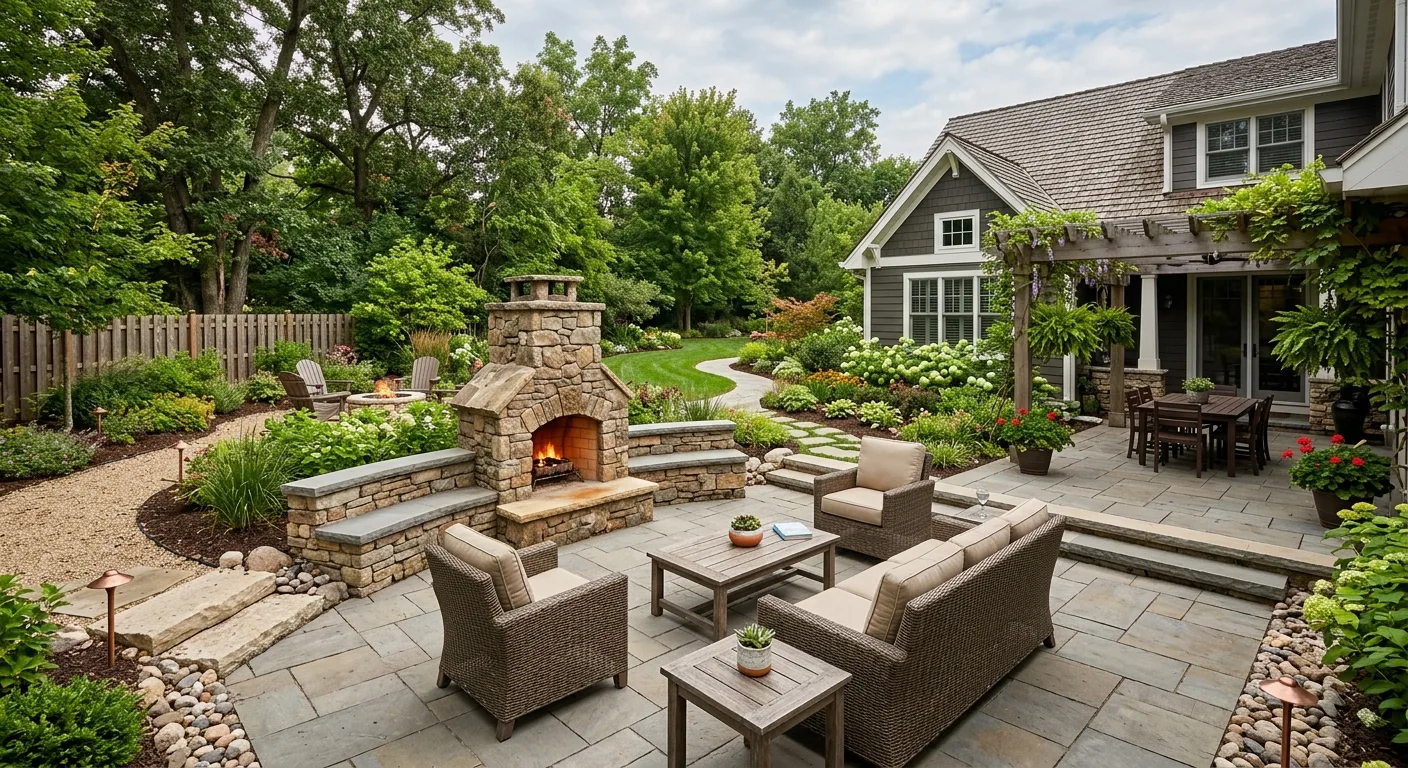
Segmental block retaining wall holding a graded slope on an Algonquin, IL property
Retaining Wall Drainage and Grading: The Part You Don't See
Continue
Retaining wall drainage and grading is the part of the job you can't see once the wall is finished, and it's the part that decides whether the wall is standing in ten years. A wall traps everything the hillside above it soaks up. On Fox Valley clay that's a lot of water, and saturated clay behind a wall builds enormous pressure, especially once it freezes and expands. So the drainage behind the block isn't an upgrade. It's structural.
When the whole lot moves water badly, not just the slope, the wall drainage ties into a broader plan. We coordinate retaining walls with regrading and french drain and yard drainage so the wall isn't fighting water the rest of the property is dumping on it. On properties in South Elgin and Barrington Hills where a slope and a wet yard came as a package, solving both together is what actually dried things out. Call (224) 325-7922 and we'll read where your water is going before we build anything.
Holding a Slope? Get the Drainage Read First.
A leaning or bulging wall only gets worse and more expensive the longer the pressure sits behind it, and a new wall built without drainage starts failing the day it's finished. Get the slope and the soil read before you commit to either. Call Virgil directly at (224) 325-7922 or request a free estimate online. V. Cardenas Landscaping, Inc. installs retaining walls throughout the Fox Valley, from Algonquin and Sleepy Hollow through South Elgin, Barrington Hills, and most Chicagoland suburbs in the northwest corridor.
Call (224) 325-7922Or send us your info
FAQ Common questions
Frequently Asked Questions
Answers below
Do I need a retaining wall for a sloped yard, or would regrading solve it? +
Not always, and that's an honest part of the assessment. A retaining wall earns its cost when a slope is eroding, unusable, or sending runoff toward the house. If your yard has a gentle grade that holds its grass and only pools in one small low spot that dries within a day, a regrade or a downspout extension often solves it for far less than a wall. We recommend a wall when the slope genuinely can't be held any other way. If a simpler fix works, that's what Virgil will tell you at the free estimate.
How long does a retaining wall last in Illinois? +
A properly built retaining wall can last 30 to 40 years or more in northern Illinois, but longevity comes down to what's behind it, not the block on the face. The two things that shorten a wall's life here are water pressure from clay soil with no drainage, and a base that wasn't compacted below frost-affected depth. We build a free-draining gravel zone with filter fabric and a perforated drain behind every wall, and set the base on compacted crushed stone, so Fox Valley freeze-thaw doesn't heave it. A wall built without that drainage often starts leaning within three to five winters no matter how good the block is.
What's the difference between block, natural stone, and poured concrete retaining walls? +
On most Fox Valley residential lots we build interlocking segmental block, because the system is designed around drainage and the open joints handle freeze-thaw without mortar cracking. Natural stone is the choice when the look matters most, common on established Barrington Hills properties, and it still needs the same gravel-and-fabric drainage behind it. Poured concrete makes sense for tall structural walls but is less forgiving of the soil movement clay produces every spring. The material affects cost and appearance. The drainage behind it, which we build the same way regardless, is what keeps any of them standing.
How do you handle drainage behind a retaining wall on clay soil? +
Drainage cost driven by water pressure is the reason we lead with it. Every wall we build gets a free-draining gravel zone directly behind the block, wrapped in filter fabric so clay fines don't clog it, plus a perforated drain pipe at the base pitched out to daylight. We also grade the top of the wall so surface water sheets away instead of running down behind the block. Saturated clay soil that freezes and expands is the single biggest thing that leans a wall in the Fox Valley, so keeping water from collecting behind it is structural work, not an add-on.
What areas do you build retaining walls in across the Fox Valley? +
Yes. V. Cardenas Landscaping, Inc. installs retaining walls throughout the Fox Valley and northwest suburbs, including Algonquin, Sleepy Hollow, South Elgin, Barrington Hills, Carpentersville, Elgin, and the Dundee area. Virgil has held back slopes on clay-heavy lots across the corridor for over 20 years, so the drainage and freeze-thaw problems specific to this part of northern Illinois are ones we've already solved many times. Call (224) 325-7922 and we'll come read your grade in person before quoting.